REGULATIONS
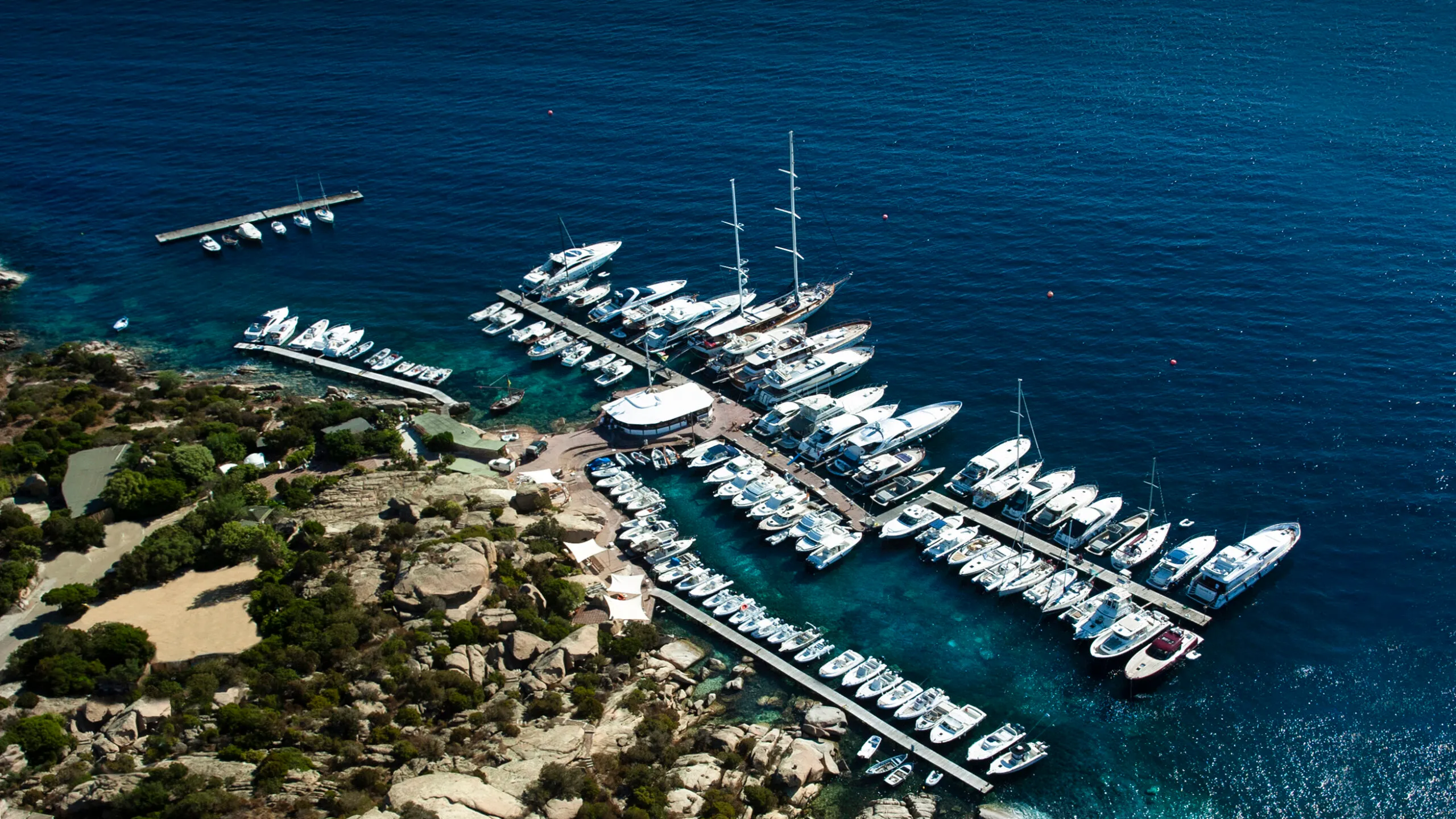
Punta Stroppello Tourist Landing
Palau
Internal
Regulations
1. PREMISES
1.1 SOURCES
Punta Stroppello snc of Ottavio Pincioni & C., with
registered office in Palau at Località Punta Stroppello, has drawn up these Internal Regulations in accordance with the content
of the formal state concession deed No. 02/2000 of the Concessions Register No. 277 of 09.09.2000, entered into with
the Maritime Administration of Olbia, relating to the occupation and use, for a duration of 20 years, of a maritime
state-owned area and a body of water for a total of 3810 square meters located in Località Punta Stroppello of the
Municipality of Palau, for the purpose of maintaining and managing a tourist harbor for recreational craft and related
infrastructure (hereinafter referred to as the "Port").
The rules contained in these regulations must be
strictly observed by all users of the port, as defined below, and by anyone entering it for any reason.
1.2
IDENTIFICATION OF THE PARTIES
In these internal regulations, Punta Stroppello snc of Ottavio Pincioni & C.
will be referred to simply as the "concessionaire," while the term "user" will indicate the natural or legal person
or entity to whom the right to use a mooring berth and related port services is assigned, or who otherwise makes use
of them in both public and reserved mooring areas (Owner, Captain, or person in charge of the vessel,
charterer, subcontractor, etc.), as well as all those who, even occasionally, frequent the Port and
in any case the entire state-owned area under concession in the locality referred to in the preceding article.
1.3
AMENDMENTS AND UPDATES
The concessionaire reserves the right to update these Internal Regulations at any time,
subject to the approval of the Maritime Authority, with any further provisions that may become necessary or be
deemed appropriate to make the Port safer, more efficient, functional, clean, and pleasant for Users, in accordance
with the provisions of the competent Maritime Authorities.
2. TRANSIT MOORING BERTHS
Availability of mooring berths for public or transit use.
A
vessel in transit, i.e., arriving in the Port without a prior reservation duly confirmed by the concessionaire,
may use the moorings intended for public use (north side-buoys) provided there is suitable availability at the time of
entry into the Port.
The stay shall be free of charge for a period limited to the first 12 hours, within the time
frame from 8:00 AM to 8:00 PM. During this period, vessels are in any case required to pay for general port services at
100% (one hundred percent) of the current tariffs approved by the Maritime Authority. Once the aforementioned period
has expired, transit Users are required to pay the mooring fees.
The benefits provided for in the previous point
apply to all vessels. In any case, a transit user may not moor in the transit area for a consecutive period exceeding
7 (seven) days. The right to a transit mooring berth is interrupted as soon as the vessel departs from it. This is to
prevent any form of hoarding. Leaving the transit mooring berth for a period of less than 24 hours does not interrupt
the course of the seven-day maximum stay in the transit area. Should the concessionaire identify a need for availability
in the transit area, any User moored there for more than seven days must vacate the occupied mooring berth upon simple
request and, if they wish to remain in the Port's body of water, transfer to the berths currently available for
reserved mooring, in accordance with the procedures, conditions, and tariffs indicated by the concessionaire. The rules
above also apply to vessels that may be out of service. Consequently, transit moorings cannot be reserved, except by
the concessionaire and the Maritime Authority, for proven reasons of safety or force majeure.
3. GENERAL RULES FOR VESSEL CIRCULATION
3.1 ACCESS AND STAY OF RECREATIONAL CRAFT
Landing is
permitted at all times only to recreational craft as well as, free of charge, to State vessels; in case of
bad weather or force majeure, to vessels in general. Mooring is calculated in days of presence, i.e., in
24-hour periods starting from noon. Fractions of a day are calculated as a full day, without prejudice to the
provisions concerning transit stays.
3.2 VESSEL IDENTIFICATION AND LABELS
Upon the vessel's arrival
at the Port, all users, regardless of the type of mooring berth they occupy, must go to the Port Office and fill
out an "Arrival Declaration" reporting all details of the vessel, the User, and the mooring conditions. The user is
responsible, for both administrative and operational purposes, for the accuracy of their Arrival Declaration. Every
vessel moored in the port must be clearly identifiable by the Port Office staff. The user must therefore ensure that
the name or registration number of their vessel is clearly visible from the quay or pontoon. For small craft or
vessels without a registration number, name, or other distinguishing mark, the User must request a numbered adhesive
label from the Port Office to be kept visible on board. Any unidentifiable vessel or craft will be deemed by the
concessionaire to be occupying a mooring berth unlawfully and may be moved to restore berth availability.
3.3
MANEUVERING IN THE PORT
The port's body of water is solely intended for mooring and unmooring maneuvers and for
the entry and exit routes of vessels. In performing all maneuvers within the Port, and particularly docking and
departure maneuvers, the user must always adhere to the international regulations for preventing collisions at sea,
the instructions issued by the Maritime Authority, and those of these Regulations, as well as the written or verbal
directions given by the concessionaire or its employees, with the User remaining fully responsible for the execution
of their maneuver.
The user must notify the Port Office in advance in the event of an absence exceeding
24 hours, arrival after 9:00 PM, or departure before 8:30 AM or after 7:30 PM. Sailing is prohibited within the port
area, except in the event of failure or lack of an auxiliary engine. Any type of maneuver not connected with the
aforementioned operations is prohibited, particularly for motorboats and windsurfers. Unless otherwise expressly
ordered by the Maritime Authority, the maximum speed permitted within the port is 3 (three) knots.
3.4
ANCHORING
Except in cases of force majeure, anchoring within the concession body of water is prohibited without
the permission of the concessionaire. It remains at the discretion of the person directing the maneuver to evaluate
whether anchoring is necessary for greater safety.
3.5 MOORINGS
Vessels must be moored safely and in
accordance with proper seamanship rules. Each mooring berth is equipped with a mooring system consisting of sinkers,
ground chains, bollards, and in some cases buoys on chains. The maintenance of these structures is carried out by
the concessionaire. For mooring berths reserved under an annual concession contract, the User is responsible for the
custody, maintenance, and replacement of the mooring lines from the chain to the vessel and from the vessel to the
quay, being solely responsible for their efficiency and suitability. This applies, for the mooring lines from the chain
to the vessel only, also during periods when the User has authorized guests to benefit from their mooring or has
temporarily waived its use in favor of the concessionaire.
For mooring berths reserved under an annual concession
contract, the User is responsible for the custody, maintenance, and replacement of the mooring lines from the chain to
the vessel and from the vessel to the quay, being solely responsible for their efficiency and suitability. This applies,
for the mooring lines from the chain to the vessel only, also during periods when the User has authorized guests to
benefit from their mooring or has temporarily waived its use in favor of the concessionaire.
Users with temporary
concession contracts or in transit are solely responsible for the suitability and efficiency of the mooring line from
the vessel to the quay and the mooring line from the vessel to the chain for the part of it located on board.
The
concessionaire may, in any case, replace any mooring line ex officio, with the right of recourse against the User,
should it find it in a precarious state that compromises safety.
The User may not modify the mooring system or the
supply systems of auxiliary services without the prior authorization of the Port Office. In order to prevent wear on
mooring lines and the wooden flooring of the pontoons, Users are required to cover the loops of their land cables with
suitable protection. The Port Office reserves the right to replace and/or protect such cables should it verify their
inadequacy, with the right of recourse against the User.
3.6 LAND ACCESS AND VEHICLE CIRCULATION
Vehicle
access to the Port is governed by the Highway Code, by the Maritime Authority with its own ordinances, and by these
regulations. Access by any vehicle, motorcycle, lifting or working equipment, as well as vehicles used for transporting
boats, is strictly prohibited within the port area, except for the concessionaire's vehicles and those expressly
authorized by the Port Office, and in any case only for the time strictly necessary to carry out the operations for
which authorization was granted.
Users must comply with the road signs, stopping and parking vehicles exclusively in
designated areas. The maximum speed of vehicles authorized to access the port area is 10 km/h. The use of horns is
prohibited except in cases of absolute necessity.
3.7 FORCE MAJEURE CASES
Without prejudice to the duties
and powers of the Maritime Authority regarding sea rescue, in the event of particular meteorological conditions, danger
to human life, or any other dangerous situation evaluated as such by the Port Office itself, it may also use the paid
crew of the vessels present for emergency services. In such cases, Users are obliged to make their employees available
free of charge. The Port Office reserves the right to temporarily change mooring berths due to weather conditions,
safety reasons, works, maintenance, or force majeure events deemed as such in the sole discretion of the concessionaire,
with prior notice to the Users concerned. The User cannot refuse to leave the mooring berth for the aforementioned
needs. Any damaged or unmanned boats, should the aforementioned events occur, may be removed by the Concessionaire's staff
without requiring specific authorization from the User. If a vessel sinks within the port area or in the access area to
the Port, without prejudice to the provisions of the Navigation Code, the User is obliged to remove or dismantle it
after obtaining approval from the Maritime Authority and, as far as the concessionaire's competence is concerned.
3.8
POLLUTION AND NUISANCE
In the Port (as defined in Art. 1.1) it is prohibited to:
3.8.1 unless specifically
authorized in advance by the Maritime Authority and the concessionaire, use generators, test engines, or perform any other
operation that generates disturbing noise before 9:00 AM and after 10:00 PM, or between 1:00 PM and 4:00 PM, as well as the
permanent use of searchlights and sirens;
3.8.2 abandon or throw rubbish of any kind, objects, or any other liquid or
solid substance into the water or onto the quays and pontoons; for solid waste, only the designated bins provided in the
port must be used, while for liquid waste, as well as for personal needs, the existing toilets on land must be used,
unless the vessel is equipped with specific watertight sewage collection devices or chemical toilets; the Port is equipped
for emptying such tanks;
3.8.3 use shipboard sanitary systems with direct discharge into the sea;
3.8.4 abandon
exhausted batteries anywhere; a special container is available in the Port;
3.8.5 empty bilge water, clean fuel and
oil tanks; engine oil replacement may be carried out by depositing used oil in the designated containers;
3.8.6
obstruct quays, piers, or pontoons with objects, materials, tenders, or anything else;
3.8.7 keep pets in the port
area except for the time strictly necessary for boarding and disembarking. In any case, all appropriate precautions must
be taken to prevent their presence from causing nuisance, discomfort, or soiling the pontoons and quays;
3.8.8 scrape
hulls or superstructures, as this would cause pollution and the port is not suitable or authorized for toxic waste
disposal.
3.9 SAFETY PRECAUTIONS AND VERIFICATIONS
Users' vessels must comply with current laws for
national and foreign recreational craft and must be efficient for navigation and mooring safety.
In particular,
any abnormal setup that could cause a fire hazard or result in damage to neighboring vessels and land facilities must be
avoided. The concessionaire shall have the right, within the scope of the concession contract, to establish any
additional safety rules to ensure the best management of the Port. The regulatory prerogatives of the Maritime Authority
also remain in force.
The User must observe the following preventive and general provisions:
3.9.1 Refueling, even
partial, is strictly prohibited within the Port area, whether by mobile tanks, road vehicles, or any type of tanker.
In the event of a special and recognized need to refuel vessels using systems other than the fixed fuel station, express
prior written authorization must be requested and obtained from the Maritime Authority and the concessionaire;
3.9.2
before starting the engine, the User must ventilate the engine compartment;
3.9.3 onboard fire extinguishers must
comply with current regulations, be in adequate number, and in perfect working order;
3.9.4 onboard electrical
systems must be in a perfect state of functioning, insulation, and maintenance;
3.9.5 vessels in the Port must not
hold any dangerous or explosive substances, other than regulatory safety flares (flares, hand flares, etc.) and fuels
necessary for use. Facilities and appliances intended for fuel must comply with the regulations in force for vessels of
that category;
3.9.6 in the event of a fire on board a vessel, both the vessel's crew and the crew of nearby vessels
must do everything possible to extinguish and isolate the flames, while informing the Port Office as quickly as
possible, which will immediately inform the competent authorities. In particular, the burning vessel must be immediately
isolated, under the care of the concessionaire's staff or the owner;
3.9.7 before mooring, every vessel must check
that there are no hydrocarbon leakage residues in the bilge and that no leaks are in progress;
3.9.8 in the event of
a fuel spill on the water surface, quay, docks, or pontoons, the User must immediately notify the concessionaire, as
well as the Local Maritime Office of Palau, while starting the clean-up of the affected area with the means at their
disposal and informing the crew of nearby vessels and everyone present. Clean-up of the affected area will be carried out,
under the control of the local Maritime Authority, by the concessionaire with its own personnel and equipment (as provided
for in the local anti-pollution plan) at the User's expense. Clean-up action will also be carried out by the concessionaire
in cases where the responsible User is not identified and the spill is caused by persons unknown.
3.10
INSPECTIONS
The concessionaire may order inspections at any time to contribute with the Maritime Authorities to the
prevention of accidents and damage relating to moored vessels. In particular, the concessionaire may order, should there
be reasonable grounds, inspections on board moored vessels to verify that they are in perfect working order for safety and
comply with the regulations issued on the subject by the competent authorities. Moored vessels found, as a result of the
aforementioned checks, not to comply with safety regulations, may be removed from the concession area with the favorable
opinion of the Maritime Authority. A copy of the access keys to the moored vessel must always be deposited at the Port
Office.
3.11 INSURANCE
The User's vessel must comply with the current legislation on compulsory civil
liability insurance. The concessionaire may remove any vessel from the concession area whose insurance coverage does not
meet the above requirements.